Paramount Gold Nevada's Grassy Mountain Project Advances Toward Production Following Federal Approval and Permitting Milestones

5 minute read - Published 09:00 AM EST, Thursday, April 16, 2026
This article was authored by witan nook. on behalf of Paramount Gold Nevada
In the rugged terrain of Malheur County, Oregon, Paramount Gold Nevada's Grassy Mountain gold project stands as a beacon for modern mining potential. Spanning approximately 8,200 acres of private and Bureau of Land Management (BLM) land, the project centers on a high-grade gold-silver deposit located entirely on private property, supporting an efficient path to underground development.
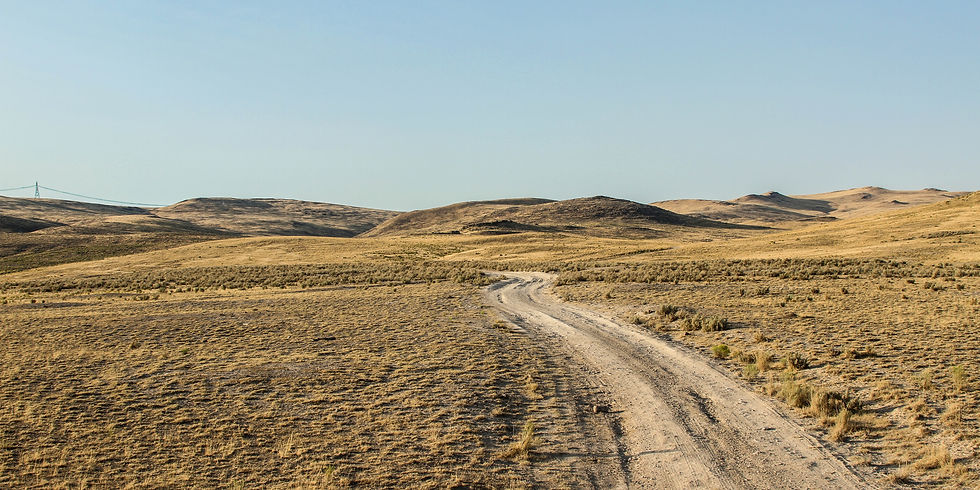
The Grassy Mountain Gold Project’s Access Road, in Malheur County, Oregon | Paramount Gold Nevada
Project Overview and Economics
The Grassy Mountain project is positioned to become Oregon's first modern-day gold mine, backed by a robust 2022 Feasibility Study that demonstrates economic viability at conservative metal prices of $1,750 per ounce of gold and $22 per ounce of silver. The study outlines an initial eight-year mine life with average annual production of approximately 47,000 ounces of gold and 55,000 ounces of silver from a 750 tonne-per-day carbon-in-leach processing facility with recoveries of approximately 93% for gold and 73% for silver. Initial capital expenditures are estimated at $136 million, with an additional $36 million in sustaining capital and $12 million in closure costs. At these base-case prices, the project generates an after-tax internal rate of return of 23% and a net present value (5% discounted) of $114 million. Life-of-mine cash costs are estimated at $681 per ounce of gold equivalent, with all-in sustaining costs of $815 per ounce of gold equivalent, highlighting a low-cost, high-margin profile for a high-grade underground operation utilizing mechanized cut-and-fill methods.
These economics position Grassy Mountain as a near-term development opportunity in a rising gold market, and as such, Paramount has engaged Ausenco Engineering to update the Feasibility Study in the first half of 2026 to reflect current metal prices and further optimize project economics.
The project's district-scale land package also offers significant exploration upside, with the potential to extend mine life and enhance long-term value.
Local Community Benefits
Beyond financial metrics, Grassy Mountain is expected to deliver meaningful benefits to Malheur County, a rural area seeking economic stimulus. Construction and operations are set to generate hundreds of high-quality local jobs, along with indirect employment across supply chains, hospitality, and services, contributing to economic growth in a region with limited opportunities.
The project’s modest environmental footprint, combined with a commitment to use best-available technologies for mining, processing, and reclamation, aligns with community priorities. Strong local support is reflected in Malheur County's extension of key permits through mid-2027. In addition, the County’s Economic Development Director, Taylor Rembowski, drafted a public letter expressing strong support for the project, citing its significant potential to drive job creation and economic growth.
Paramount has emphasized collaboration with local stakeholders, including partnerships with the Malheur County Sheriff’s Office and Vale Rangeland Fire Protection Association, while promising taxes, royalties, and investments to bolster schools, infrastructure, and small businesses. CEO, Rachel Goldman has highlighted the project’s potential to "stimulate the local economy...with high-quality jobs," positioning it as a catalyst for sustainable regional growth.

Regional Map Showing Grassy Mountain’s Proximity to Local Cities and Towns | Paramount Gold Nevada
August 8, 2025: Draft EIS Release Marks Key Federal Milestone
Paramount's permitting progress advanced on August 8, 2025, when the BLM released the Draft Environmental Impact Statement (DEIS) for Grassy Mountain - the first for a gold mining project in Oregon. This milestone under the National Environmental Policy Act (NEPA) followed the project's inclusion in the federal FAST-41 program in May 2025, which aims to improve transparency and coordination in the federal review process. The DEIS was subject to public comment, incorporating stakeholder feedback on environmental, socio-economic, and alternative analyses to help inform the path forward. The Company’s management team has described the release as validation of years of technical preparation, helping to pave the way for final federal decisions later that year.
December 8, 2025: Oregon Issues Draft Consolidated Permits
State-level progress continued on December 8, 2025, as the Oregon Department of Geology and Mineral Industries (DOGAMI) published a draft consolidated permit package, coordinating input across multiple state agencies - a pioneering achievement under Oregon's new framework. The package addressed construction, operations, closure, and monitoring requirements for the proposed underground mine, reflecting regulatory review of Paramount’s proposed technologies and processes earlier in the year.
DOGAMI held a public hearing on January 29, 2026, in Vale, Oregon, with the public comment period closing on February 6, after which final permits were expected in early 2026. CEO Rachel Goldman described it as a "landmark achievement," crediting coordinated reviews and community engagement.

Memo announcing the inclusion of additional mining projects, including Grassy Mountain | The White House
December 16, 2025: Federal Approvals Timeline Confirmed
On December 16, 2025, Paramount announced that the BLM had confirmed the final Environmental Impact Statement (EIS) and Record of Decision (ROD) would be issued in January 2026, despite minor delays related to a federal shutdown and the holiday period. This announcement also recapped 2025 milestones, including FAST-41 designation, issuance of the draft EIS, state draft permits, and county-level extensions, while noting that an updated feasibility study was underway.
CEO Rachel Goldman highlighted the efforts of the Oregon BLM team and emphasized the project as one of the first of its kind to advance through Oregon’s permitting process.
January 29, 2026: ROD Signed, Project De-Risked
Culminating these efforts, Paramount announced on January 29, 2026 - the same date as the state hearing - that the BLM had signed the ROD, completing the review process under NEPA. The final EIS incorporated public comments, solidifying federal approval for responsible development on BLM lands. The project’s inclusion in the FAST-41 program contributed to a more coordinated and streamlined review process, with key documents made available through federal permitting portals. CEO Rachel Goldman described it as a "historic milestone for...Oregon," rendering Grassy Mountain "shovel-ready" to bolster U.S. mining and Malheur County's economy.
With federal approvals secured, the Company is now focused on advancing state permitting, with final permits expected in the second half of 2026, alongside a Feasibility Study update in mid-2026.
These sequential advancements significantly reduce permitting risk for the Grassy Mountain project, aligning regulatory progress with technical readiness and a strong economic profile. As Paramount continues to advance permitting and technical work, the project demonstrates how a coordinated permitting approach can unlock value in the U.S. precious metals sector.
This article was authored by witan nook. and paid for by Paramount Gold Nevada in American dollars.
Disclaimer
This article contains forward-looking statements subject to risks and uncertainties. Information presented is current as of the date of publication and may be subject to change. For a full description of forward-looking statements and risk factors, please refer to the Company’s public filings.


Comments