Paramount Gold Nevada has updated their Grassy Mountain Gold Project’s Feasibility Study. How does it compare to 2022, and what’s next?

4 minute read - Published 09:00 AM EST, Monday, June 15, 2026
This article was authored by witan nook. on behalf of Paramount Gold Nevada
Paramount Gold Nevada’s 2026 feasibility study for the Grassy Mountain Gold Project in eastern Oregon reflects a notable improvement over the 2022 study, with stronger economics, a longer mine life, and a larger recoverable gold inventory, supported by an optimized mine plan and a significantly higher commodity price environment. Based on the numbers presented, the project now appears materially more robust as Paramount advances toward a construction decision and permitting progresses toward completion, positioning the project as a compelling near-term development opportunity.

Outcrop at the Grassy Mountain gold project, in Oregon | Paramount Gold Nevada
The Grassy Mountain Gold Project’s Updated Economics
The updated feasibility study, released May 28, 2026, presents a stronger outlook for Grassy Mountain than the company outlined in their feasibility study of 2022. The study, prepared under S-K 1300, is based on assumed metal prices of $3,600 per ounce of gold and $48 per ounce of silver, and lifts the project’s after-tax net present value (NPV) to $374.7 million with an IRR of 38.9%, and a payback period of 2.2 years. In the higher-price scenario, using $4,618 per ounce of gold and $74 per ounce of silver, after-tax NPV rises to $608.6 million, with an IRR of 55.4% and a payback period of 1.4 years. The base-case economics provide investors with a benchmark that remains below recent spot gold prices while highlighting the project's sensitivity to a strong precious metals market.
That is a much stronger economic profile than the 2022 study, which used $1,750 per ounce of gold and $22 per ounce of silver and generated an after-tax NPV of $114.1 million, an IRR of 22.5%, and a 3.3-year payback. In plain terms, the 2026 update does more than just improve the headline valuation; it materially increases the project’s leverage to the current gold price environment while shortening the time required to recover capital.
What has changed since 2022?
One of the most important operational changes is the revised mine plan, which extends the mine life to 9.3 years from 7.8, and increases total recoverable ounces by 7% to 385,800 ounces from 361,800 ounces. While annual production is slightly lower, with average annual gold production projected at 41,400 ounces versus 46,600 ounces, and annual silver production at 51,500 ounces versus 54,500 ounces, the revised mine plan extends mine life and total recoverable ounces. Rather than maximizing annual output, the revised mine plan appears designed to optimize overall project value and longevity, creating a more robust production profile with increases in total recoverable gold and silver over the life of the mine.
The updated study also reflects a higher cost environment than the 2022 feasibility study. Initial capital expenditures increased to $189.8 million from $136.2 million in 2022, while sustaining capital increased to $65.1 million from $36.1 million. Cash costs, net of by-product credits, increase from $681 per ounce to $1,218 per ounce in the base case, and all-in sustaining costs increase from $815 per ounce to $1,442 per ounce. Paramount attributes these increases to refined development cost estimates and broader industry-wide inflationary pressures.

The Grassy Mountain gold project’s 2022 and 2026 Feasibility Study metrics | Paramount Gold Nevada
Reserve and Resource Scale
On a mineral inventory basis, the 2026 study reflects growth in both reserves and resources. Proven and probable gold mineral reserves increase to 405,000 ounces from 380,000 ounces in 2022, while silver reserves rise to 625,000 ounces from 554,000 ounces. Measured and indicated gold mineral resources, inclusive of reserves, also increased to 1.36 million ounces, compared with 755,000 ounces in the 2022 study.
The higher reserve and resource estimates support the extended mine life and larger overall production profile outlined in the updated mine plan.

Malheur County’s rocky topsoil, near the Grassy Mountain gold project | Paramount Gold Nevada
Permitting and Timing
Paramount Gold has made significant permitting progress at Grassy Mountain since the 2022 feasibility study. In January 2026, Paramount received a positive Record of Decision and the final Environmental Impact Statement from the Federal Bureau of Land Management. In addition, State permitting is in its final stages with approval expected in the second half of 2026. Together, these milestones represent significant progress in advancing the project toward development.
To become a mine, the next steps are dependent on any remaining permits and a future construction decision, so the feasibility study strengthens the case for development without eliminating the usual risks tied to financing, permitting completion, and execution.
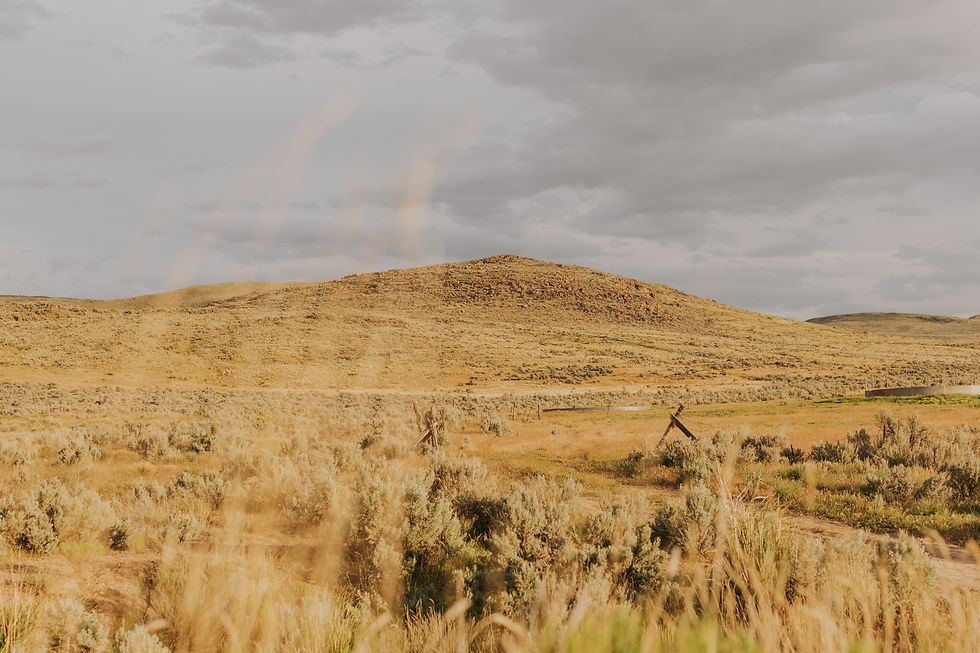
The Grassy Mountain gold project, in Malheur County, Oregon | Paramount Gold Nevada
Viability and Stature
Taken together, the 2026 feasibility study positions Grassy Mountain as a credible near-term development asset with improved economics and a larger mineral inventory than before. The project’s 9.3-year mine life, 38.9% after-tax IRR, and 2.2-year payback at the base case are strong for an underground gold project, especially one that has already reached a positive federal Record of Decision and final EIS.
The Bottom Line
The 2026 feasibility study outlines a project with stronger economics, a larger mineral inventory and greater permitting certainty than was reflected in the 2022 study. The updated mine plan extends the mine life, increases total recoverable ounces and supports higher project valuations under both the base case and upside-case scenarios.
With major federal permitting milestones achieved and state permitting nearing completion, the project enters its next phase of development in a much stronger position than in 2022.
This article was authored by witan nook. and paid for by Paramount Gold Nevada in Canadian dollars.
Disclaimer
This article contains forward-looking statements subject to risks and uncertainties. Information presented is current as of the date of publication and may be subject to change. For a full description of forward-looking statements and risk factors, please refer to the Company’s public filings.


Comments